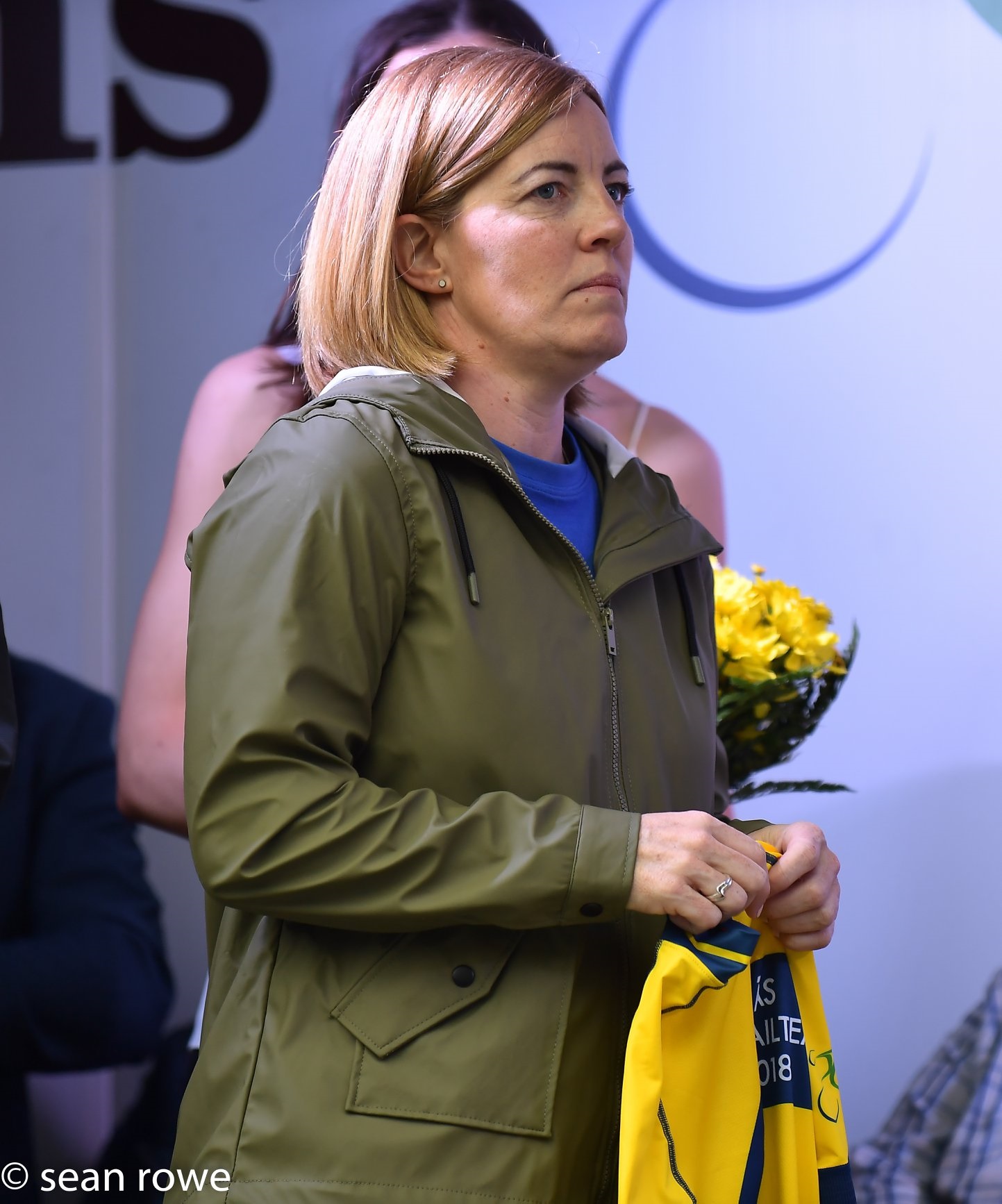
The pressure is now reaching a maximum on the Rás organisers, led by Eimear Dignam. They are into the final few weeks to find a sponsor and keep the show on the road next year. While under pressure and working hard, Dignam is not without hope. But she doesn't feel crowdfunding or shortening the race to save cash is the answer (Photo: Sean Rowe)
By Luke Maguire
The organisers of Rás Tailteann have ruled out turning to crowdfunding to keep the race on the road next year.
Race director Eimear Dignam said many people had suggested crowdfunding. The race organisers, she added, had seen and acknowledged those ideas.
But it was not a road they were keen to go down; understandably believing a longer-term plan was required.
“A lot of people have been suggesting raising money online through crowdfunding websites like Go Fund Me,” Dignam said.
Advertisement
“And it’s not as if we haven’t been acknowledging people’s ideas. But this way of doing things is just firefighting for 2019.
“We need a sponsor that is going to sustain us for the next three to five years.
“We are all volunteers and you cannot keep going to the well for the whole of June, July and August of every year looking to try and secure another €350,000 for the following year.”
Dignam said there was definitely no more money left in reserve, with any spare cash used up last year.
And now the race had one month to stay on the road, as key decisions need to be made by the end of November or not at all for next year.
In a wide-ranging interview, she also said changing the race to a short event would not be significantly cheaper. And the Rás would never return to being an eight-day event if it was scaled back now.

The Rás is a unique event that throws up compelling Irish sporting stories; Eoin Morton taking a stage in 2016 almost four decades after his father Peter was victorious into Mallow one of those stories.
While she the volunteers of Cumann Rás Tailteann, the club that organises the race, were working hard to try and secure the 2019 edition.
This work had not yet yielded anything concrete, but Dignam still struck a hopeful tone.
“Currently we are without a sponsor. We will keep pushing away at it for the next month before we can reach a decision on whether or not we can pursue with a 2019 edition,” she explained.
“We have set a deadline at the end of November as the cut-off for whether or not the race can go ahead.”
After that it would be too late, for example, to begin issuing invites to foreign teams. And she believed it was only fair to the Irish and foreign riders and teams, as well as the UCI, to have clear plans or a decision by the end of November.
“On a weekly basis I have calls and emails going with PR companies or directly to marketing directors myself. The difficulty we are having is getting to the right people,” she said.
“I contacted Eoin Morton (a Rás stage winner) who works in the marketing industry. And he understands the pressures we have.
“He has given me a bit of a hand to try and knock on doors with various companies and so forth. So, at the moment we have a number of them on the go.
“It’s not doom and gloom, we do have a number of people who we are actively in talks with.
“Whether they come to anything, be it a full sponsorship or a partial sponsorship, remains to be seen.
“The full cost of running the race is €350,000. We have been very open about this because the full cost we would get from a sponsor goes to the direct running of the race.
“Nobody involved in the organising committee profits from the investment. That (budget) covers the UCI fees, the Gardaí, accommodation for all the officials and petrol.”
The budget also covered having UCI-registered teams in the race, which it must have to keep its UCI status.
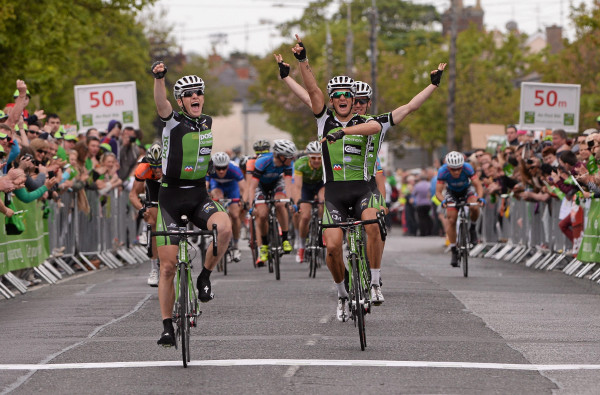
Sam Bennett (far left) takes the final stage of the An Post Rás into Skerries back in 2013. He has since become a top flight pro and won three Giro stages this year. He is part of the Rás story, and the race helped him achieve his first big successes.
The race was sponsored for years by the FBD insurance company. After that, An Post took over as the title sponsor.
But it ended its deal in 2016 and last year the race was only possible because of cash reserves squirreled away during the years.
Dignam said the Rás organisers were open to having one significant title sponsor, or several smaller ones who would share the sponsorship, and the publicity.
Related News


“In the ideal world and partly because myself and a lot of the other volunteers are working full time, we would get a single full sponsor,” she said.
“In this day and age and in the current economy that is much more difficult. If we could secure two sponsors or four sponsors to share the load, we would also be delighted with that.
“There is enough branding opportunity across the whole race to provide the same equal opportunities to a number of sponsors.”
She pointed out Europcar had supplied vehicles last year and were very happy with the publicity they received in the media and on social media.
The company has offered to be the vehicle partner again next year if another vehicle backer is not secured.
She added Stephen O’Sullivan, a former stage winner and the race route planner in recent years, had mapped out a route for next year.
Indeed, two routes were sketched out in the event flexibility was needed depending on who a new sponsor may be.
However, the next step was putting in place stage end plans, which included surveying them. But this cost money, which the race does not have right now.
And so Dignam and her team are back to saying they need to commence elements of the planning by the end of the month. That means a sponsor is needed by then.

The men from the Mayo Centra team looked pretty wasted after the 2012 Rás stage into Budoran. They didn't win that year, but they made it. And for amateur riders taking on this challenge, survival is often a great personal triumph bringing a life-long sense of pride.
“The worst-case scenario is there’s no Rás,” she said of the edition which, all going well, would run next May as usual.
“Cumann Rás Tailteann are here to run an eight-day international cycle race. Because last year we used our reserve funds; we managed to scrape within our budget by just a couple of thousand Euro.
“So we now do not have any reserves in our account for any type of race. Regardless of what happens, we need a sponsor to put on any kind of race.”
However, while the race was under pressure, she did not believe shortening it for next year to cut costs was the answer.
“We shouldn’t be stepping back that way. There is no other International stage race in the country that allows riders to earn UCI and Olympic qualification points,” she said.
“Realistically, bringing it back to a domestic county rider race shouldn’t be in the back of our minds.
“The calendar is full of races for guys. But if you don’t have the quality of this race, then Ireland’s standing in the international cycling community disappears.
“The difficulty from dropping it from an eight-day to a five-day is that we would never get it back to an eight-day.
“We are one of the last eight-day races on the UCI international calendar. All other are either 5 or 10 days.
“We have managed to stay on it because that is the type of race we have been,” she said adding cutting three days would save little anyway.
But what of the national sporting authorities; surely it is time for Sport Ireland and Cycling Ireland to step in?
“Sport Ireland are aware of the difficulties we are in. Cycling Ireland are well aware also,” says Dignam.
“But I’m sure they are looking for funding for cycling in general not just the racing side.
“I don’t know about government ministers and so forth; or how aware they are with the status of the race and the direction it is going."

Tony Martin on his way to winning the Rás aged 22 years in 2007. He has since gone on to win the world TT title four times, claimed five Tour de France stages and held the yellow jersey in that race. He is an example of the type of rider Irish amateurs get to race against on the Rás.
Eimear Dignam continued: “From my perspective I’ve just been so focused on trying to find a corporate sponsor that government funding or Sport Ireland haven’t really come onto the radar.
“We do get a small amount of funding through Cycling Ireland that comes via Sport Ireland, which other cycle races in the country also receive.
“If we get the Rás on the road again next year who knows - three years later we may produce another Sam Bennett or Eddie Dunbar.
“All these guys cut their teeth on the Rás and not just the Irish riders. The likes of Tony Martin and John Degenkolb have also put this race on the map.
“When I watch the Tour de France or the Giro d’Italia every second day somebody who has ridden the Rás is up the road or getting their face on the camera.”
If the race disappeared, she said Ireland’s standing in international cycle would suffer. Furthermore, the opportunity to watch international cycling on the roads of Ireland would be lost.
Irish riders would also miss the chance of having a go against the UCI teams once a year on Ireland’s biggest race.
Topics


