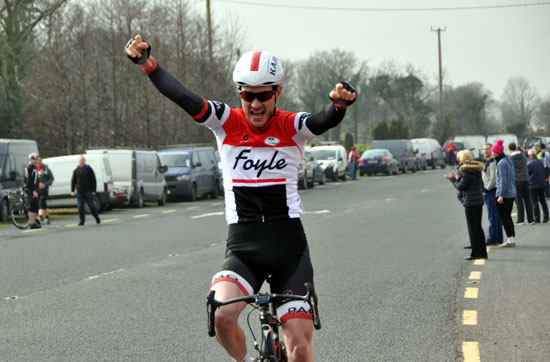
Ronan McLaughlin has had a fine cycling career and has represented Ireland on a number of occasions, including the UCI world road race championships as an elite rider in 2012. Despite stepping away from the full-time game, the Foyle CC man is still one of the very best on the home scene. (Photo: Marian Lamb – Cycling Ulster)
Ronan McLaughlin has been one of the real servants of Irish cycling over the years and has rarely been found wanting when it matters in races.
Despite working full-time in Derry, the 29 year-old has shown a great ability to knock himself into serious shape when he needs to.
And as well as his job as a car salesman he has amassed quite a coaching resumé.
He takes an holistic and common-sense approach to training and here he offers three very useful training tips to bear in mind.
Advertisement
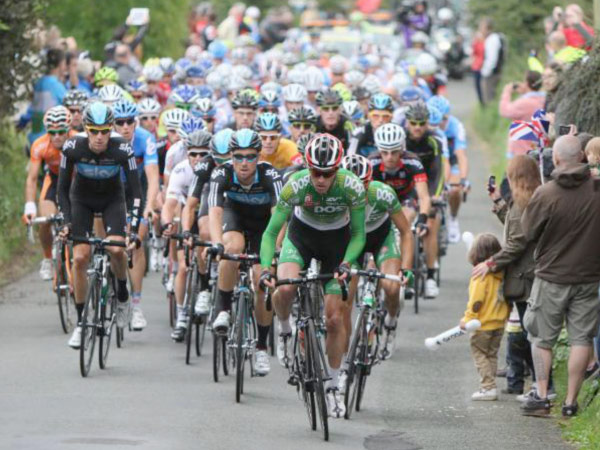
Ronan McLaughlin leads the bunch up a climb in the 2012 Tour of Britain. The Donegal man rode for several seasons on the continent and represented Ireland at the highest level.
1 Make the most of the time you have
You don’t need to do 25-30 hours a week to be a good rider.
I averaged 8-10 hours per week week last year and though I was never up for the win in the An Post Rás I was more than capable of holding my own.
Related News


Tuesday, Wednesday, Thursday and Friday I was up at 6 in the morning this week to get on the bike for an hour.
It’s what I love doing and I can build this into my work day.
I am off work this Saturday so I'll train then and on Sunday with the club.
I’m riding the bike, not exactly smashing intervals or doing power sessions; but I am still riding.
Should you only have eight hours, making the most of that eight hours is a lot better than wasting 20 hours.
2 Consistency is the key
The number one thing whether it’s spring, summer, autumn or winter is consistency.
There’s no point in putting in 20 hours of the highest-quality training one week and then doing nothing for two weeks and trying to jump back in with a 20-hour week.
3 Specify your training to match your demands
It's important to train for what you’re actually looking to achieve.
If you want to race the Rás there’s no point training all winter in zone 1 and 2 heart rate trying to build an endurance base; you need to be doing more specific work, definitely.
The analogy I always use is asking the goalkeepers to train with the striker and the striker to train with the goalkeeper.
It’s just the wrong type of training.
Topics


